 English
 日本語
 한국어
 العربية
 Deutsch
 ไทย
 Français
 Español
 Português
 Italiano
 Bahasa Indonesia
 中文
Pea Fiber vs. Soybean Residue: How to Compare 1.5 mm Tofu Cat Litter
A practical test plan for buyers who want to compare pellet strength, fines and clumping without declaring a winner from the raw-material name.
There is no defensible “hardest” winner without a comparison
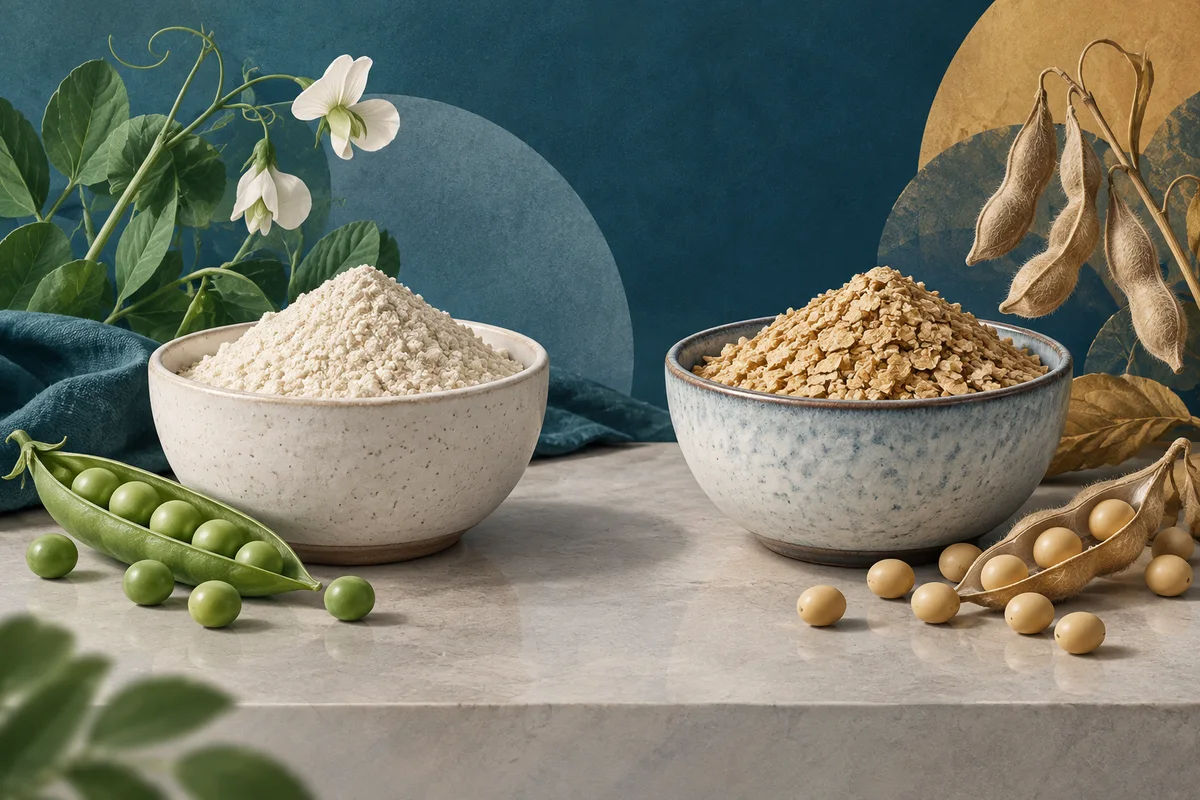
A purchase decision should not start by declaring pea fiber superior to soybean residue, or the reverse, without comparable data. “Pea fiber,” “pea husk,” “soybean residue” and “soybean hull” are not interchangeable ingredient specifications. Ask suppliers to identify the material and formulation being offered before comparing samples.
The nominal 1.5 mm description also needs definition: is it an intended diameter, what tolerance is used, and how are length distribution and fines specified? A small nominal diameter is not a hardness result. This guide proposes a buyer’s comparison plan; it does not report a Tekbi laboratory trial or claim that a particular 1.5 mm product is currently available.
Separate pellet strength from wet-clump strength
Agree what “hardness” means in the project. Dry pellet resistance to crushing, resistance to abrasion during handling, and the strength of a wet clump are different evaluation questions. A sample that performs well in one check should not automatically receive the same rating for all three.
Ask for the instrument or procedure, conditioning, sample size, reported units and repeatability behind each numerical claim. If the supplier uses a non-standard internal method, document it and use it consistently. Avoid comparing two data sheets as if their figures were equivalent when the methods are different.
Control the variables before comparing pea and soy samples
For a raw-material-focused development trial, ask the technical partner to document which formulation and process variables are held constant and which are intentionally changed. Record ingredient composition, particle dimensions, conditioning and sample age. For finished commercial products, accept that multiple variables may differ and describe the result as a product comparison, not proof that one plant material caused it.
Code the samples so assessors can record observations without being guided by a premium-material label. Agree repeat samples and a reporting format before testing. Keep the reference bags and lot information so a later production sample can be compared with the same baseline.
Use a balanced scorecard, not hardness alone
Include dry breakage, fines after agreed handling, absorption, wet-clump handling where relevant, tray residue, cleaning observations and packaging condition. Report the actual result for each item. Discuss the trade-offs required by the intended use rather than assuming the greatest single hardness reading is automatically the best litter.
USDA ARS has described a researched litter formulation using soybean hulls together with other ingredients. That work illustrates why the whole formulation matters. It is not a head-to-head pea-fiber-versus-soybean-residue trial, and its reported outcomes cannot be transferred to an unspecified commercial tofu litter or to Tekbi products.
Turn a successful sample into a measurable order specification
The final specification should identify the selected formulation reference, agreed dimensions and tolerances, the test procedures and acceptance criteria, the package, and the retained reference sample. Decide how batch variation and a proposed material change will be reviewed. Ask whether transport-handling checks are part of the agreed verification.
Compare quoted cost on the same basis, including pack size, fill quantity and delivery terms. Do not add an unsupported “premium pea fiber” story to the label simply because one sample appears stronger. Any composition wording should match the delivered product.
Frequently asked questions
Is pea fiber always harder than soybean residue? This article does not establish that claim. Comparable formulation and test data are needed.
Can a supplier’s soybean-hull study prove a soybean-residue product’s performance? Not automatically; identify the ingredient, recipe and procedure being studied.
What should I send Tekbi? Provide your desired particle specification, target market, performance priorities, preferred composition and evaluation method so sample feasibility can be discussed.