 English
 日本語
 한국어
 العربية
 Deutsch
 ไทย
 Français
 Español
 Português
 Italiano
 Bahasa Indonesia
 中文
How to Launch a Private-Label Cat Litter Brand: From Packaging Design to Shipping
A stage-by-stage launch plan and MOQ checklist for retailers, distributors and emerging pet brands.
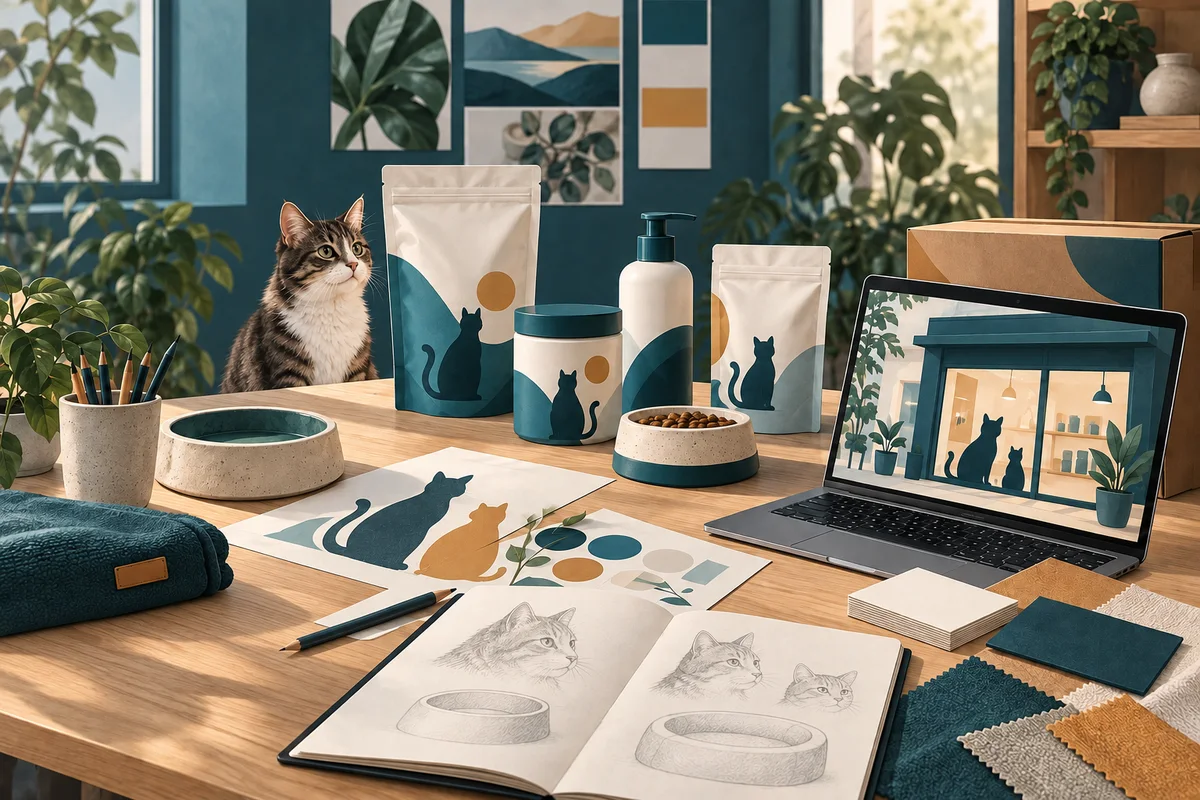
Start with a commercial brief before commissioning artwork
Define the first customer, destination market, sales channel and intended retail position. A supermarket bag, an online subscription pack and a distributor’s wholesale offer may need different handling and presentation requirements. Decide which product claims you can support rather than beginning with a list of impressive-sounding promises.
Write a one-page brief covering material preference, fragrance preference, pack size, projected initial demand, target launch window and budget assumptions. These are planning inputs, not evidence of demand. A limited initial range may make your brief easier to evaluate, but availability and commercial feasibility still need a supplier’s confirmation.
1. Confirm specifications, then evaluate the sample
Discuss composition, particle dimensions, performance priorities and packaging before selecting the reference sample. Agree how the sample will be evaluated and which documents are available. Keep the sample’s identity and the assessment record. If a claim cannot be supported, revise the proposed wording before it reaches the artwork.
Do not treat a sample approval as permission to change the formula or bag later without review. Record the product reference, specification version and approval date. Agree how changes will be communicated, and which changes require a new sample or a repeat check.
2. Build a complete packaging brief
Choose the proposed bag format and fill quantity, then request the dimensions and print requirements for the actual package. Specify closure, carrying features, lot marking and outer-carton needs. Review a filled packaging sample where feasible; a flat design file cannot show how the bag handles when full.
Supply the logo, verified product name and composition, barcode requirements and destination languages. Assign responsibility for checking local label rules. Approve spelling, measurements and product statements on the final production artwork, not only on an early visual mockup. Do not print claims copied from another brand without product-specific support.
3. Use an MOQ checklist instead of asking for one number
Ask whether minimum quantities are defined per formula, fragrance, pack size, printed design or total order. Ask separately about the product-production minimum and the packaging printer’s minimum. Confirm whether any quoted quantity assumes a stock bag, a custom print run or a particular packing process.
Record tooling or artwork charges, unused packaging ownership, reorder conditions, permitted quantity variation and what happens if the design changes. Ask whether a pilot order or shared packaging approach is feasible; do not assume either option exists. Tekbi does not publish a universal MOQ in this guide. The actual minimum and customization scope must be confirmed for the project.
4. Compare the complete cost and schedule
Request a quotation with a clear unit basis, pack quantity, currency, validity, payment terms and named delivery terms. Build a planning worksheet separating product, packaging, setup, testing or inspection, freight, insurance, customs-related charges and destination handling as applicable. Have the importer or service provider confirm taxes and regulatory costs. Avoid promising a retail margin from an incomplete ex-factory price.
Create milestone dates for specification approval, sample review, artwork approval, production, checks, booking and handover. Identify who owns each milestone and which approvals must occur before the next stage. Treat tentative lead times as estimates until confirmed.
5. Agree checks, shipment documents and launch feedback
Before authorizing production, agree the batch identification, sampling or inspection plan, product checks, package integrity checks and the process for resolving a discrepancy. Keep the approved sample and artwork accessible to the people reviewing the finished goods. Confirm shipping documents with the importer and freight partner for the actual destination.
At receipt, record carton and bag condition, lot numbers and any differences from the approved reference. Collect retailer or customer feedback by product and batch rather than mixing unrelated observations. Use the findings to plan replenishment, packaging changes or further sample evaluation. A repeat order should refer to the approved specification, not just the brand name.
Your first inquiry: information to send
Send the destination country, customer type, proposed material and fragrance, pack size and bag format, estimated quantity for each SKU, logo or artwork status, desired launch date and the checks you expect. Include any importer document requirements already identified.
Tekbi can use that brief to discuss the available product and packaging options, sample requirements and project feasibility. This is a planning guide, not a promise of manufacturing capacity, a fixed MOQ or a guaranteed delivery date. Confirm the scope, quotation and schedule in writing before committing to the launch.